The Big Takeaways:
- Growing firms see operational gaps widen quickly, especially without centralized systems for matter management, billing, and communication.
- Automating matter workflows, time tracking, intake, and payments recovers hours each week while reducing errors and missed revenue.
- All-in-one legal practice management software compounds efficiency gains by connecting case data, billing, documents, and reporting dashboards in a single platform.
Growth exposes operational gaps quickly, especially at small to mid-sized firms without dedicated IT departments or strong administrative benches to contain them.
According to the ABA’s 2025 Legal Industry Report, 65% of firms using generative AI tools save one to five hours per week on tasks like drafting correspondence, scheduling, and invoice preparation, and that figure doesn’t account for the broader efficiency gains from workflow and billing automation.
The opportunity is real, and most firms don’t need a full technology overhaul to maximize it. All they need to know is where to start.
Five Places to Start Automating (and Why They Compound)
For growing firms, the highest-return moves happen in five operational areas:
- Matter management
- Time tracking and billing
- Client communication
- Document and workflow automation
- Payments
The returns from each of these interconnected systems multiply when they’re working together. The right legal practice management software brings all five under one roof.
1. Matter Management
When case details are spread across email threads, shared drives, and individual inboxes, no one has the full picture.
Attorneys duplicate work. New hires spend more time searching for information than using it. Deadlines surface too late.
Having a centralized matter management system ties contacts, documents, tasks, and deadlines to each case in one place, so everyone on the team works from the same real-time view.
CARET Legal’s matter management dashboard does this with customizable views by practice area, responsible attorney, or open date. Per-matter permissions keep sensitive cases restricted, while activity logs and audit trails provide accountability without extra effort.
One firm using the platform reduced its lead-to-retainer time from seven hours to two and a half after building custom intake forms and task templates within CARET Legal.
With this as the foundation, everything that follows is more streamlined.
2. Time Tracking and Billing
Delayed time entry is one of the quietest revenue drains in legal practice.
According to Bloomberg Law’s 2024 Attorney Workload and Hours Survey:
- Attorneys spend roughly two out of every eight working hours on administrative tasks.
- Time tracking is often the first thing that gets pushed to the end of the day or the week.
That delay has real financial consequences. According to the ABA’s Litigation News, law firm realization rates have been declining year over year, with roughly 75% of the top 100 firms reporting a drop in 2023. For small and mid-sized firms, where margins are tighter, even modest realization losses from missed time entries and write-offs translate directly into revenue left on the table.
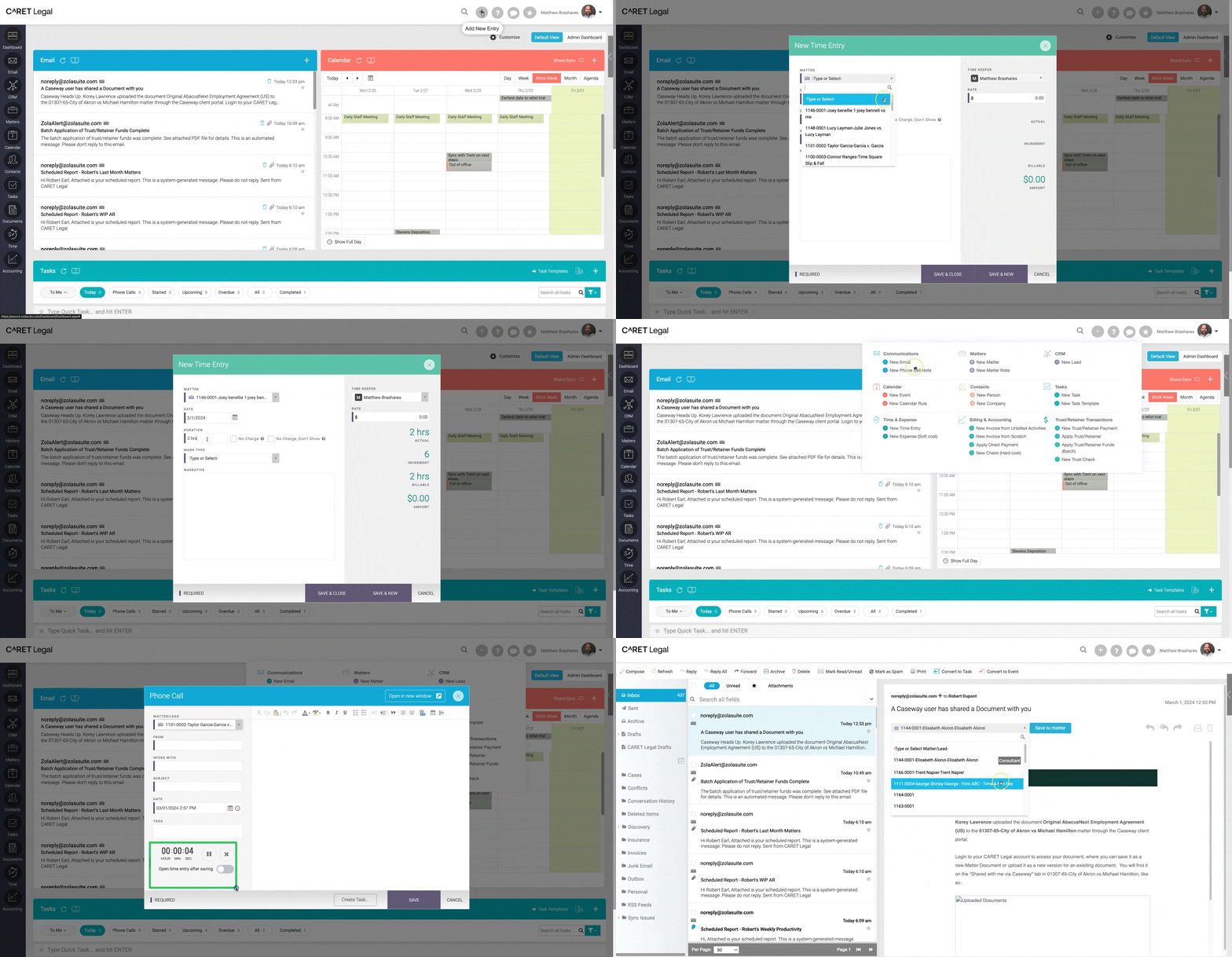
Built-in timers, automatic time suggestions generated from email and calendar activity, and invoicing all live inside the same platform where you manage matters.
CARET Legal’s billing and time tracking tools are integrated directly into the practice management system, so there’s no toggling between platforms. The Outlook integration lets attorneys capture time entries directly from email, and the platform supports LEDES billing, split billing, and bulk invoicing for firms managing high volumes.
3. Client Communication and Intake
When a firm is growing, the client experience is usually the first thing to suffer.
Leads go cold because no one followed up within 24 hours. Existing clients send emails asking for status updates that require manual digging. Intake forms live in a PDF that someone has to re-enter by hand.
A legal CRM embedded within your law firm software changes the workflow.
CARET Legal’s CRM tracks leads and referral sources so firms can identify where their best clients come from and make sure no prospect falls through the cracks. Custom intake forms collect information upfront and feed it into the system, reducing the back-and-forth that slows down onboarding.

On the client-facing side, CARET Legal’s secure portal lets attorneys share documents with clients and receive files back, while clients can view and pay invoices directly through the portal.
The platform also supports client texting, giving firms a direct, convenient communication channel that meets clients where they already are: on their phones.
4. Document and Workflow Automation
Time spent recreating documents from scratch, manually assigning follow-up tasks, and chasing down next steps adds up quickly and introduces risk in a growing firm. When processes depend on someone remembering to do something, things get missed.
Workflow automation replaces memory with systems. CARET Legal Workflows let firms schedule tasks and meetings automatically based on case type, using pre-defined templates that standardize every stage of a matter. When a new personal injury case opens, for example, the platform can auto-generate all associated tasks, deadlines, and calendar events without manual setup.

Paired with document management and automation tools, including template-based document generation, version control, and centralized storage, this is where firms move from keeping up to getting ahead.
5. Payments and Financial Visibility
Slow collections are a cash flow problem, but they’re also a visibility problem. When a firm can’t see in real time what’s been billed, what’s been paid, and what’s outstanding, it’s harder to make confident decisions about hiring, marketing, or expansion.
CARET Legal’s integrated payment system, CARET Pay, processes credit card, ACH, and e-check payments directly within the platform. Invoices match with client records in real time, reducing errors and double-billing. Clients can pay through the portal or through PayNow links, and according to CARET Legal, 75% of clients pay their invoices the same day when using PayNow links.
Paired with built-in reporting dashboards, firm leadership has immediate insight into cash flow, staff productivity, aging receivables, and matter profitability, all from a single system.
When Firms Outgrow Their Systems
What works at 10 matters a month doesn’t scale to 40. Manual intake, disconnected billing, and ad hoc communication start costing real money in missed billable time, slower collections, and client frustration.
Choosing the right platform matters as much as choosing to automate. When you’re evaluating legal practice management tools as a 5 to 25-person firm, feature lists matter less than how well the platform fits the way your practice actually operates.
Ease of Adoption
Limited staff means limited time for ramp-up. The platform should be intuitive enough that attorneys and support staff can start using it without weeks of training. CARET Legal’s interface is designed for quick adoption, and every subscription tier includes onboarding support and staff training.
All-in-One Architecture
Every bolt-on tool adds cost, creates data silos, and introduces one more thing that can break. The best law firm management software handles matter management, billing, documents, communication, and payments inside a single system, eliminating that fragmentation entirely.
Cloud-Based With Mobile Access
Attorneys aren’t always at a desk. CARET Legal runs in the cloud and offers native iOS and Android apps so your team can track time, review matters, and manage tasks from a courtroom, a home office, or anywhere in between.
Security and Compliance
CARET Legal is the first cloud-based legal practice management software platform to achieve SOC 2 compliance, backed by military-grade encryption, two-factor authentication, and 24-hour vulnerability scanning. When client data is on the line, security is an ethical obligation. The ABA’s 2024 Legal Technology Survey found that 60% of firms have formal cybersecurity policies, but smaller firms often lag behind.
Start With One Problem, Then Build
You don’t have to automate everything at once. Pick the area creating the most friction right now. For most firms, that’s either time tracking or matter management, and start there. Measure the time saved. Show the team the results. Then layer on the next piece.
CARET Legal’s own 2026 tech outlook for small and mid-sized firms reinforces this approach: start small, focus on high-impact areas, and build momentum with early wins. The firms that thrive aren’t the ones that adopted every tool at once. They’re the ones that invested in legal practice management software early, before things started breaking.
If you’re ready to see how CARET Legal’s law firm software solutions work for a firm at your stage, schedule a demo today to explore the platform firsthand.