The Big Takeaways
- Built-in time tracking tools embedded in legal practice management software improve accuracy, reduce revenue loss, and streamline billing.
- Disconnected systems create billing delays and missed entries—native timekeeping reduces this burden by syncing with daily workflows.
- CARET Legal connects time tracking, invoicing, and reporting in one platform, making it easier to bill accurately and manage firmwide productivity.
Built-in time tracking software for law firms not only exists, but it has become one of the clearest ways for firms to reduce billing delays, improve accuracy, and strengthen cash flow. Instead of juggling separate apps or relying on handwritten notes, attorneys can record work directly inside the same system they use for matters, calendars, documents, and invoicing.
What “Built-In” Really Means in Legal Time Tracking
In legal practice, built-in time tracking refers to native embedded timekeeping tools that live inside a practice management platform. These tools are not plug-ins, browser add-ons, or stand-alone apps. They are part of the core system, designed to connect seamlessly with the workflows attorneys already follow. Native tracking works in tandem with calendars, tasks, matter notes, and billing functions, which makes timekeeping more accurate. Removing friction helps prevent the drop-off that often occurs when time tracking tools feel disjointed from everyday work.
Why Law Firms Struggle Without Integrated Time Tracking
Many firms still rely on outdated systems like spreadsheets, email logs, or separate timers. These methods tend to create gaps because they depend on memory and manual effort. Attorneys often reconstruct their time at the end of the day or week, which increases the likelihood of errors and lost billable hours. This pattern is common in firms that delay entries until billing season, and it leads to inaccuracies and avoidable administrative work.
Disconnected systems also slow down billing cycles since staff must:
- Fix entries
- Interpret incomplete notes
- Reconcile time from multiple locations
How Embedded Timekeeping Reduces Workload
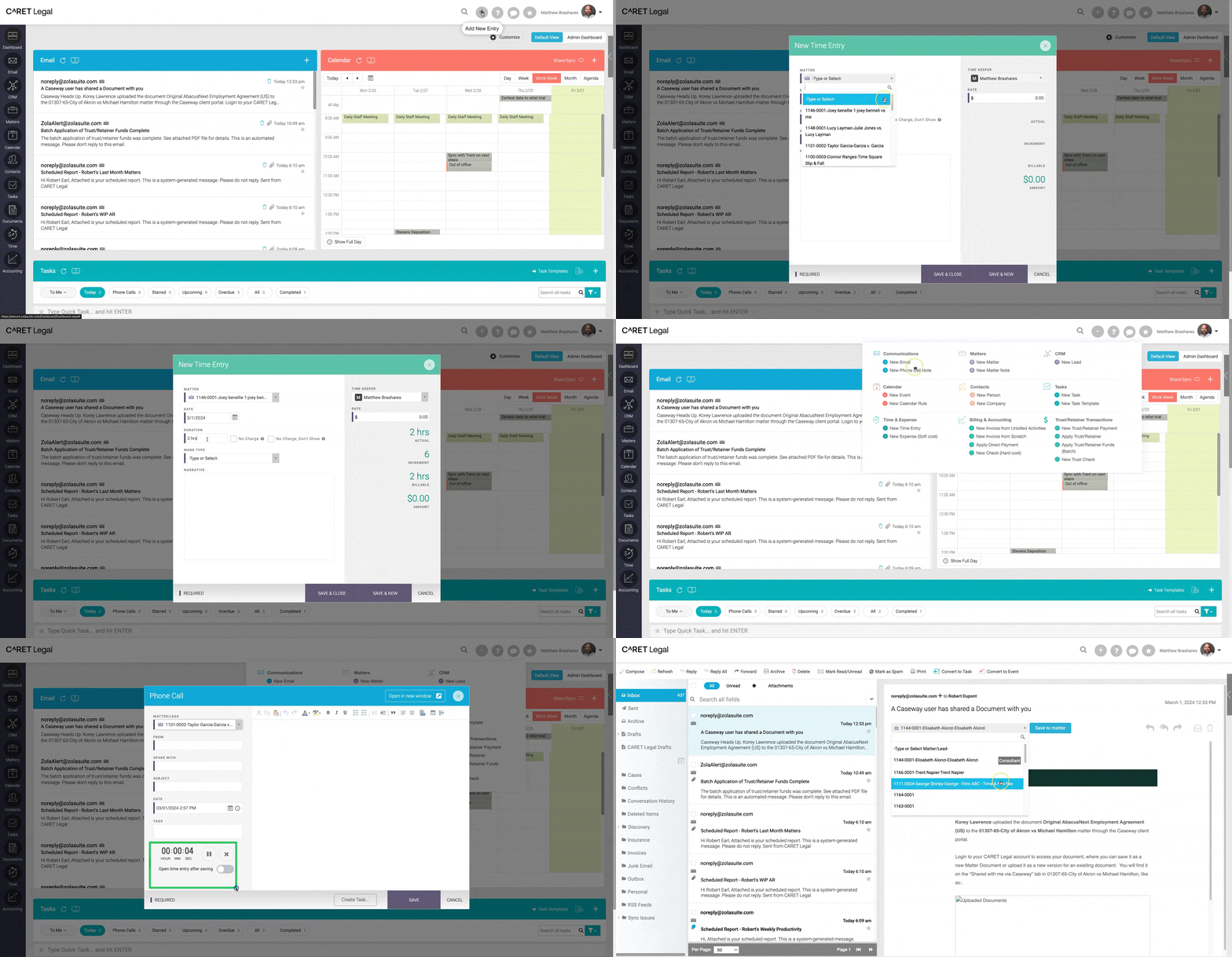
Embedded timekeeping gives firms a simple alternative to manual timers, fragmented apps, and the habit of reconstructing time hours after the work is done. This approach supports timely and accurate entries. Attorneys can use built-in timers and enter time in context, such as while working on tasks or reviewing documents, converting that effort into billable time with just a few clicks. When attorneys log time as they work, it reduces the stress of reconstructing activity after interruptions. Embedding time tracking within daily workflows helps minimize missed time entries — reducing revenue loss from unbilled activity.
Benefits of Built-In Time Tracking for Firm Financial Health
When time entries flow directly into invoicing, firms reduce the risk of inconsistent data and last-minute cleanup. Integrated timekeeping links seamlessly to billing rules, matter information, and accounting data, which helps ensure accuracy across the entire workflow.
These connections also support stronger financial visibility because they give firms a clearer view of work in progress and the status of each matter. Unified systems reduce reconciliation work and create a more complete financial picture for decision-making for law firms.
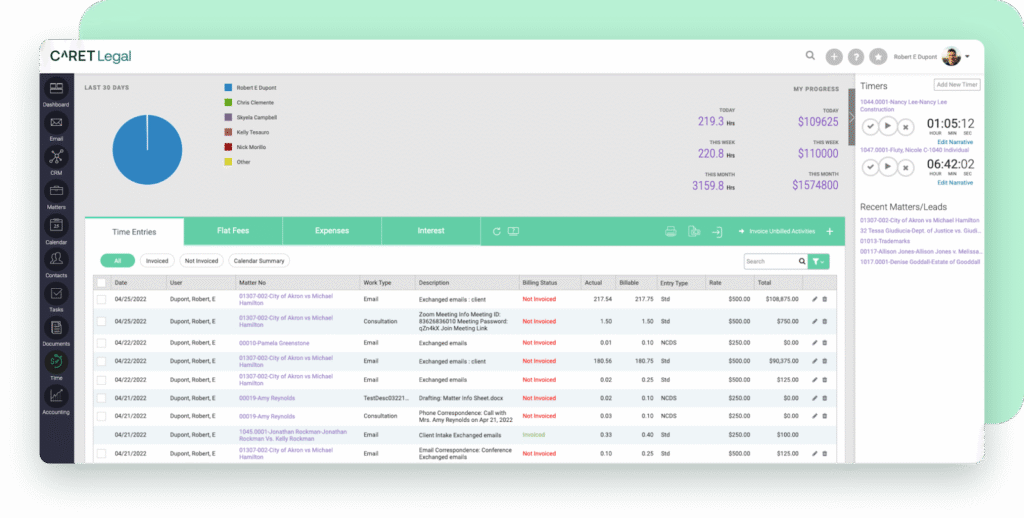
Partners can then review profitability by matter, attorney, or practice area without compiling reports from multiple systems.
Improving Firmwide Adoption With Simpler Time Tracking Habits
Consistency improves when time tracking tools are easy to access and blend into existing routines. Built-in timers create pathways for quick entries. When attorneys can log time from a desktop or mobile device, they are more likely to record work while it is still fresh.
When firm leaders demonstrate positive time tracking habits, it sets the tone for the team. Light training reinforces best practices, helps attorneys understand where to find tools, and keeps the firm aligned on standards for daily entries. Over time, these habits support healthier billing cycles and fewer end-of-month scrambles.
Why Practice Management Integration Makes Built-In Tracking More Effective
A time tracking system becomes far more powerful when it operates within the broader practice management platform. Calendar events, emails, and phone calls can convert directly into billable entries, reducing redundant data entry and cutting down on missed time.
Centralized information also streamlines billing and reconciliation. When every entry is already tied to the correct matter, rate, and billing arrangement, invoices move through review and approval with fewer adjustments.
Integrated reporting adds another layer of value. Firm leaders gain a clear view of utilization, productivity, and time trends across the team. This helps them balance workloads and anticipate resource needs. For small and mid-sized firms, having everything in one platform simplifies operations and minimizes the overhead involved in managing multiple technologies.
What Firms Should Look For in a Built-In Time Tracking Solution
A strong built-in time tracking system should offer:
- Direct syncing between time entries, billing workflows, LEDES formats, and accounting tools
- Tools that match attorney workflows across desktop, mobile, and email
- Features and configurations that support the firm’s size, staffing structure, and practice areas
These capabilities ensure that attorneys can track work reliably and that the administrative team can move invoices through the billing cycle without unnecessary cleanup.
Is a Fully Built-In Time Tracking System Right for Your Firm?
If your firm experiences delayed billing, inconsistent entries, or frequent write-downs, a built-in time tracking system can likely help. Integrated tools reduce administrative pressure and support more accurate, timely entries. They also scale easily as caseloads grow or teams expand.
Platforms like CARET Legal show how a single system can manage time, matters, communications, and billing to create a streamlined, end-to-end workflow. When everything is connected, firms spend less time managing technology and more time supporting clients.
Explore Built-In Time Tracking With CARET Legal
Seeing integrated time tracking in action helps teams understand how much time can be saved each week. Request a demo to explore how automated timers and billing workflows operate together inside CARET Legal’s billing and time tracking software.