The Big Takeaways
- Structured time management in litigation firms protects billable hours, reduces administrative burden, and improves workload sustainability.
- Smart calendaring, automation, and delegation help litigation teams stay focused, prevent bottlenecks, and improve billing accuracy.
- CARET Legal centralizes calendars, tasks, documents, and time tracking to streamline litigation workflows and support predictable, high-quality work.
Litigation teams move through a fast, unpredictable environment shaped by filing deadlines, court schedules, complex client matters, and unexpected issues that can surface without warning. Strong time management keeps that reality from overwhelming attorney workloads. It protects billable hours, reduces administrative drag, and gives teams the structure they need to deliver consistent results across active matters.
When time is managed well, litigation firms reduce revenue leakage, maintain clear priorities, and create more sustainable workloads. The difference shows up in stronger billing accuracy, fewer bottlenecks, and teams that can stay focused on substantive work instead of chasing routine tasks.
Smarter Ways for Litigators to Protect Their Time and Focus
Better time management begins with clear priorities, structured calendars, balanced workloads, and workflows that rely on automation instead of manual upkeep. An integrated legal practice management platform ties these pieces together so litigation teams can work with predictability, accuracy, and less administrative friction.
Prioritize Tasks by Urgency, Importance, or Litigation Risk
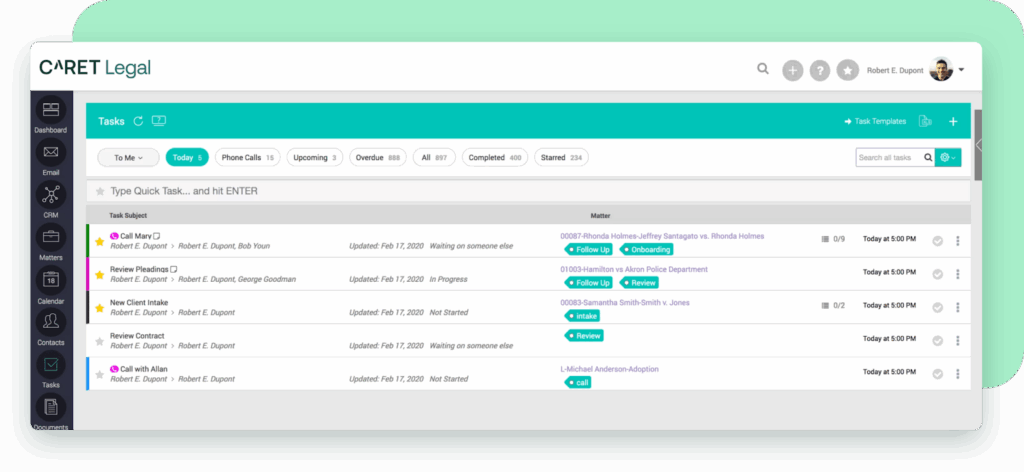
Litigation work changes quickly, so attorneys need a reliable way to understand which tasks require immediate attention and which can be scheduled, delegated, or postponed. Prioritizing by urgency, importance, or risk helps attorneys stay centered on the litigation activities that drive outcomes, instead of losing time to low-impact or routine work.
Once core tasks are identified, reminders and workflow updates keep routine steps moving forward without constant oversight. This reduces time spent tracking administrative details and limits the chance of manual follow-up being missed.
With immediate obligations and routine tasks sorted, attorneys can build structured daily or weekly priority lists based on hearing dates, filing deadlines, discovery milestones, and client communication needs. Grouping similar work, such as drafting, research, or document review, into focused blocks reduces context switching and preserves concentration for high-value tasks.
Manage Bandwidth by Time-Blocking the Calendar
Time blocking gives litigation teams a way to create structure in an environment that rarely slows down.
- Allocating specific blocks for drafting, research, discovery review, or administrative updates helps attorneys understand their bandwidth in real time, which supports better planning and more consistent follow-through.
- Blocks should include protected windows for tasks that often get delayed, such as billing, documentation, or matter updates. Treating these tasks as non-negotiable parts of the schedule keeps them from piling up at the end of the month or close to a deadline.
- Team visibility strengthens this approach. Integrated scheduling tools allow attorneys, paralegals, and staff to view availability, coordinate deadlines, and prevent accidental conflicts across matters. Clear visibility eliminates surprises and helps litigation teams stay aligned.
Balance Workloads Through Delegation and Redistribution
Litigation attorneys cannot carry every task on their own. Delegation ensures that routine work moves forward while attorneys concentrate on strategy, legal judgment, and high-impact case activities. Tasks that do not require attorney-level review can shift to paralegals or support staff so attorneys can stay focused on advancing case priorities.
As matters evolve, workload dashboards help leaders redistribute tasks across attorneys, paralegals, and staff. This prevents overload, ensures deadlines are met, and creates an equitable distribution of work.
Automation provides another layer of support by handling repetitive or routine tasks that would otherwise accumulate. When teams rely on both delegation and automation, they maintain steady progress without adding unnecessary strain to attorney workloads.
How Better Time Management Strengthens Litigation Teams and Firm Outcomes
Stronger Billing Accuracy and Reduced Revenue Leakage
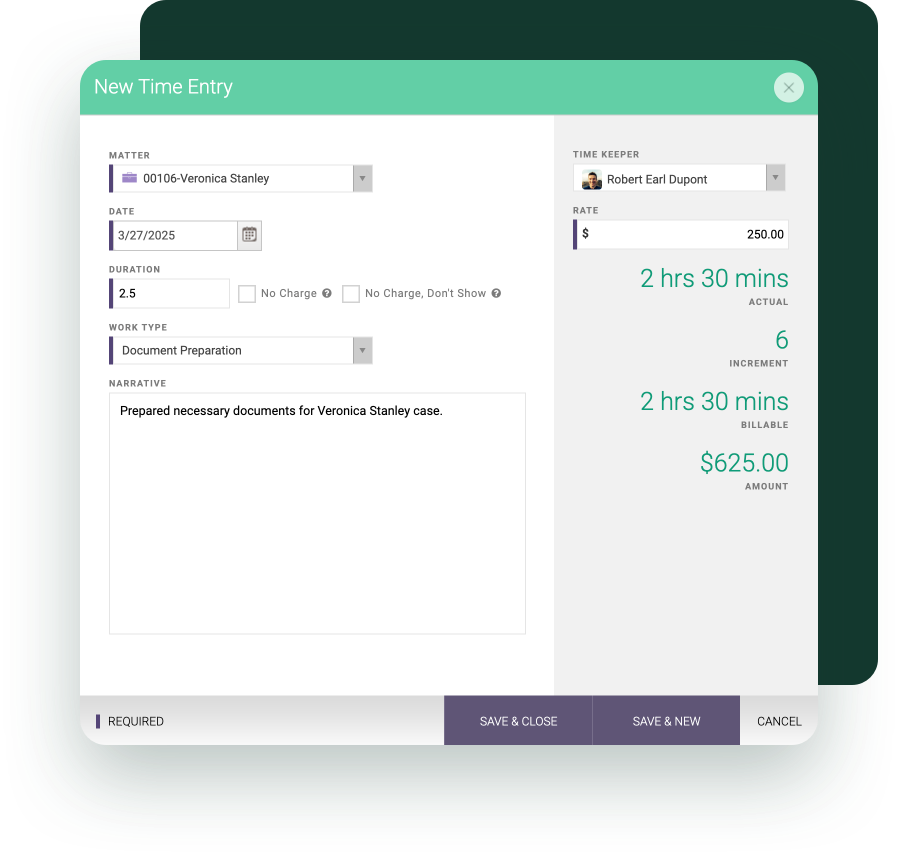
Accurate time capture supports both profitability and transparency. When attorneys track time as work happens, firms reduce revenue leakage and minimize missed entries. Clear, precise billing results in fewer disputes and stronger client relationships. Aligning timekeeping with billing workflows strengthens collections and provides audit-ready records.
Improved Cross-Team Coordination for Complex Matters
Complex litigation often involves multiple attorneys, paralegals, and practice groups. Shared dashboards allow teams to monitor progress together, while centralized updates and communication reduce workflow silos. These systems make it easier to coordinate litigation and corporate teams on hybrid or multi-issue matters.
Healthier Attorney Workloads and Reduced Burnout
Unmanaged deadlines and uncertain expectations create fatigue. Clear priorities, reminders, centralized workflows, and predictable schedules help attorneys manage their workloads without constant stress. With reduced administrative tasks, attorneys can dedicate more time to substantive casework and maintain long-term performance.
Greater Firmwide Visibility and Accountability
Centralized practice management gives firms a clear view of matter progress. Leaders and teams can track tasks, deadlines, and communication in one place. This visibility prevents missed details, supports consistent follow-through, and strengthens case outcomes.
More Efficient Workflows Through Technology and Automation
Smart and intuitive technology eliminates hours of manual upkeep.
- Embedded timers support timely entry and reduce missed time, improving billing accuracy.
- Having access to everyone’s calendars in one location makes it easier to view upcoming deadlines, which can provide clarity and predictability in a fast-paced environment.
- Document storage and searchable files reduce nonbillable search time, while automated tasks, reminders, and approvals remove friction from daily workflows.
Consistent Processes That Prevent Bottlenecks
Standardized procedures help litigation teams stay productive across multiple matters. Consistent timekeeping habits, templates for repeatable tasks, and clear policies for calendaring, documentation, and delegation reduce the chance of bottlenecks.
A Better-Enabled, Better-Informed Legal Team
Training equips attorneys with the skills to use calendaring, automation, and time-capture tools effectively. Consistent habits, reinforced through shared expectations and regular check-ins, keep the entire team aligned and productive.
Better Time Management Builds Better Litigation Teams
Adopt a Legal Practice Management Platform to Centralize Your Workflows
A unified platform brings time tracking, calendars, documents, and communication into one location. Automation reduces administrative friction and supports reliable billing accuracy. Connecting time entries directly to invoices, tasks, and matters creates a transparent, efficient system that supports litigation teams at every step.
Make Adoption Easy With a Guided Rollout
Firms get the strongest results when they build adoption around attorney feedback. Starting with core pain points such as manual timekeeping, administrative burden, and fragmented scheduling helps teams see immediate value.
Invest in Technology That Supports Predictable, High-Quality Work
An integrated law practice management software makes automation, reporting, and matter management a breeze across the entire firm. These standardized workflows reduce bottlenecks and strengthen collaboration, creating an environment where attorneys do their best work.
Start Transforming Attorney Time Management Today
Request a free trial to explore how CARET Legal’s integrated practice management platform can streamline litigation workflows and support attorney productivity.